

Flour Power
Everything to know about milled wheat.
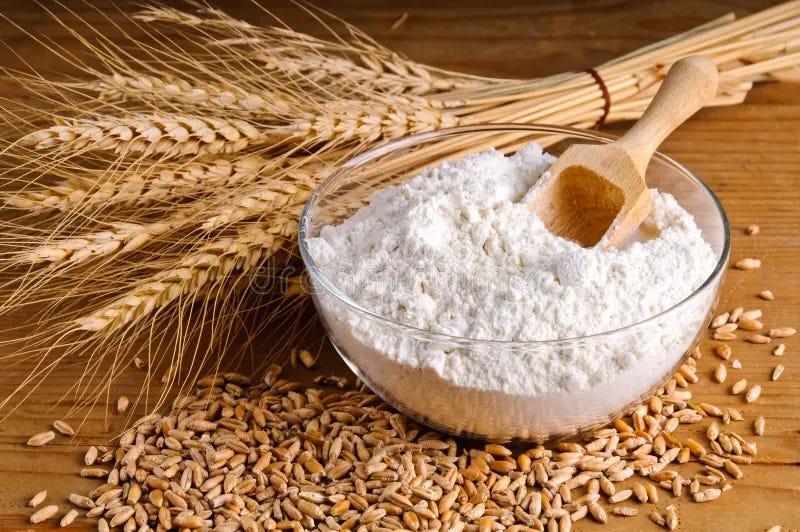
Have I mentioned how much I love fall? Now that it’s no longer too hot to cook, my brain is turning to heartier foods and baking. Writing about spätzle last week got me thinking about flour; before trying Jürgen Krauss’s recipe for it, I’ve used all-purpose flour, but his recommendation to use semolina flour made me wonder why he chose it and what the difference is between the two varieties. So I hit the Google to learn more, and decided to write up an explainer of sorts in case anyone else was curious.
That I’ve broken down only wheat flour varieties is not meant to besmirch flours from other grains, like rye—personally, I’m not sure I could live without marble rye bread or pumpernickel bagels. But that is a post for another time, which will most likely include a hilarious anecdote about an assistant I had many moons ago, brandy-new to New York City and who mistook a pumpernickel bagel on an Ess-a-Bagel tray for chocolate. :(
All-Purpose Flour
All-purpose flour is the most common type of flour available, and that is by design; it’s made from a blend of hard and soft wheat, and this combination makes it suitable for all kinds of baking and cooking. Hard wheat has a high protein content, which creates more gluten and is ideal for things like yeasted breads and pizza; soft wheat has less protein, so it’s suited to more delicate baked goods like cakes, pastries, and muffins. When you see a recipe that calls for just “flour,” all-purpose is what you should use. [FYI: I didn’t dig deep enough to learn the difference between hard and soft wheats, so please have at it if inclined.]
Self-Rising Flour
Self-rising flour is all-purpose flour with leavening agents like baking powder already added in, and it’s ideal for baked goods that require a high rise such as biscuits, pancakes, scones, and quick breads. You can make your own self-rising flour, just whisk together 1 cup of all-purpose flour with 1½ teaspoons baking powder and ½ teaspoon of salt.
Bread Flour
Bread flour is made from hard wheat and has a high protein content, designed to produce excess gluten in the kneading process. [Again, no idea what hard wheat is but I’m going with it.] Therefore, bread flour is key to making chewy, crusty baked goods like breads, pizza dough, pretzels, bagels, as well as creating sourdough starter. You don’t want to use bread flour in cakes; and, as noted below, as you def don’t want to use cake flour in breads.
Cake Flour
Cake flour is a low-protein flour made from soft wheat that’s milled to a fine, silky texture. It’s higher in starch than all-purpose flour, and therefore absorbs more liquid, fat, and sugar which results in a tender and moist crumb—this is what makes cake so cakey. (Think layer cake, angel food cake, sponge cake, and all kinds of fluffy pastries.) You can make cake flour at home, too; sift together 1 cup minus 2 tablespoons all-purpose flour with 2 tablespoons of cornstarch.
Pastry Flour
Falling between all-purpose and cake flour, pastry flour is also made from soft wheat, but has a protein content that’s in the middle of both. Pastry flour typically works best for baked goods that have a flaky texture, like croissants, pie and tart crusts, and biscuits. You can make your own pastry flour by combining two parts all-purpose flour with one part cake flour, making sure to sift it together well.
Semolina Flour
Semolina is used primarily in pasta; it’s a coarsely-milled flour made from Durum wheat [Again, I don’t know exactly what that means or why it’s important, but once more, I’m going with it] and it has a high protein content which is perfect for chewy pastas. In addition to pasta and now spätzle, I also use semolina in flatbread dough. Semolina really makes Jürgen’s spätzle recipe shine, as it adds a nuttiness and chewy texture to what could be a more soft final product that doesn’t hold sauce as well.